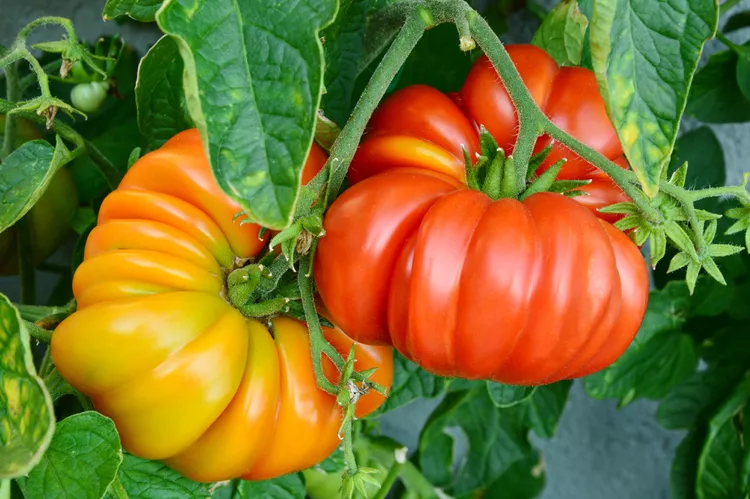
A versatile member of the tomato family, meaty beefsteaks are great for topping a burger or enjoying fresh in a salad. Grow your best beefsteak tomato plants yet with these tips specific to these unique varieties that routinely produce fruits weighing one pound or more. Whether you are growing your beefsteak tomatoes in a garden bed or container garden, here's what you need to know to enjoy a delicious harvest.
1. Choose winning hybrids.
The best varieties of beefsteak tomato plants have good disease resistance, produce generous quantities of large fruit, and have a just-right balance of acid and sugar for superb flavor. Here are 5 All-America Selections winners that consistently produce outstanding fruit.
- ‘Buffalosun’ produces 18- to 24-ounce fruit with unique yellow and red-orange skin. It has good disease resistance and sweet tender flesh.
- ‘Chef’s Choice Yellow’ offers 10-ounce fruit with deep yellow flesh and sweet flavor. Plants produce until frost.
- ‘Celebrity’ has 12- to 14-ounce fruit with exceptional flavor. It's often used for preserving as well as slicing.
- ‘Galahad’ produces 12-ounce fruit with sweet, mild flavor on highly productive and sturdy plants.
- ‘Mountain Rouge’ grows 12- to 14-ounce red fruit with minimal seeds. Fruit is ready to harvest just 75 days after transplanting.
2. Select heirlooms for exceptional flavor.
Grow heirloom beefsteak tomato plants for their superior flavor. Beefsteak heirlooms have a very short harvest window in vegetable gardens. Be sure to pick fruit as soon as it develops full color and before the flesh becomes soft. ’Big Rainbow,’ ‘Brandywine,’ ‘Cherokee Purple,’ ‘German Pink,’ and ‘Mortgage Lifter’ are excellent beefsteak heirlooms to add to your garden.
3. Plant deeply.
Because beefsteak tomato plants produce such large, heavy fruit, they are more prone to toppling over in strong winds. Deep planting will create a sturdier plant. Encourage a strong root system to develop by burying as much of the plant stem as you can when transplanting your tomato seedling into the garden. Ideally the lowest set of leaves on the transplant are just above ground level. Roots will develop along the buried stem, providing additional water, nutrients, and support that is much needed by the fruit-laden plants by midsummer.
4. Use stakes or cages.
Preventing beefsteak tomato plants from sprawling on the ground in your garden will produce more pest- and disease-free fruit. Sink a sturdy, 8-foot stake in the ground alongside the plant at planting time. Be sure the stake extends 2 feet into the soil to amply support these heavy plants. Loosely tie the main stem to the stake. Support the tomato plant by adding ties weekly as it grows.
Heavy-duty wire tomato cages are effective too. Be sure the openings in the cage are at least 6 inches square so you can harvest the big beefsteak tomatoes that form inside the cage. Cages, just like stakes, should be put in place at planting time. Ensure the cage stays in place by anchoring it with a couple of stakes pounded 2 feet into the soil. Thread the stems and branches in and out of the cage over the course of the growing season.
5. Water consistently.
Beefsteak tomatoes demand regular, deep watering to develop their massive fruit. Supplement natural rainfall with hand watering or drip irrigation to provide plants with about 1 inch of water per week. When beefsteak varieties don’t receive enough water consistently, they are more likely to develop disfiguring diseases such as blossom end rot and catfacing. Small tomato varieties develop these diseases too, but they are more prevalent and pronounced on beefsteaks so it's even more important to water them consistently.
6. Prune beefsteak tomato plants.
Excess foliage can limit the size of beefsteak fruits and delay ripening. To get larger fruit that is ripe a week or two earlier in the season, here’s how to prune your tomato plant: snip or pinch off leafy stems, called suckers, that emerge from the joint between the main stem and side branches on the lower third of the plant. The suckers do not bear fruit. They are simply excess leafy growth.
7. Don’t overfeed beefsteak tomatoes.
Too much nitrogen fertilizer causes tomatoes to produce plenty of foliage, but few fruit. The best way to fertilize beefsteak tomatoes is to incorporate a 2-inch-thick layer of well-decomposed compost into the top 6 inches of soil at planting time. As the compost breaks down, it releases nutrients that are absorbed by the tomato’s root system.
8. Harvest based on color and firmness.
Beefsteak varieties regularly produce fruit that weighs a pound or more at maturity. The large fruit takes several weeks of moderate heat, moisture, and sunlight to ripen fully. Give beefsteaks plenty of time to ripen on the vine before harvest. You will likely pick ripe grape and cherry tomatoes a couple of weeks before you harvest your first beefsteak variety. Beefsteaks are ready to harvest when they reach their mature color but still maintain some firmness.
9. Go with a big container.
Beefsteak tomatoes need large containers to grow well as potted plants. Choose a pot that is at least 20 inches deep and 24 inches wide to accommodate the plant’s large root system. Fill the pot with high quality potting soil and put a stake or tomato cage in place at planting time. Beefsteak tomatoes growing in containers need regular, deep watering to thrive. Plan to water daily in summer.
New